How to Choose Healthy Cat Treats: A Deep Dive into Benefits and the Right Daily Amount
Posted Date: 19/01/2569
How to Choose Healthy Cat Treats Benefits & the Right Daily Amount
For every cat parent, nothing feels better than seeing our boss eat well, sleep soundly, and stay happy. Cat treats are a wonderful way to build bonding moments—but a common question is How often can we give treats without harming a cat’s health?
If given too frequently, treats may contribute to weight gain and potentially increase risks related to kidney health due to high sodium or additives. This guide covers practical tips for choosing healthier treats, answers the popular question Is Okiko cat snack good?, and shares guidance for cats who need to watch their weight.
Cat Treats Are More Than Just Tasty Understanding Reward Treats
To match real-life shopping choices (and make portion control easier), this article focuses on reward treats—the most common type and the most training-friendly option.
Reward Treats These often come in forms such as dried meat strips, sliced sheets, or small cube bites.
- Why they’re a great choice They are easy to portion, can be broken into smaller pieces, and are ideal for training or rewarding your cat after activities they dislike such as nail trimming or brushing.
Pro Tip The best reward treat isn’t the big piece it’s a small, bite-sized portion that can be given more frequently without sending calories too high.
Cat Treats Are More Than Just Tasty: Understanding “Reward Treats”
To match real-life shopping choices (and make portion control easier), this article focuses on reward treats—the most common type and the most training-friendly option.
Cat Treats Are More Than Just Tasty Understanding “ Reward Treats “
Reward treats often come in forms such as dried meat strips, sliced sheets, or small cube bites.
Why they’re a great choice they’re easy to portion, can be broken into smaller pieces, and are ideal for training or rewarding your cat after activities they dislike such as nail trimming.
Tip The best reward treat isn’t the biggest piece it’s a small, bite-sized portion that can be given more frequently without sending calories too high.
How to Choose Treats Based on Your Cat’s Age & Lifestyle
Choosing treats should be based mainly on age and activity level, to help prevent long-term health issues:
Kittens (Under 12 months)
Choose treats that are soft, easy to chew, and high in protein to support growth.
Most importantly, avoid giving too many treats until your kitten gets full and refuses their main meals, which provide more complete nutrition.
Adult Cats (1–7 years)
This age group can be prone to weight gain especially indoor cats or cats that have been neutered/spayed. Look for treats labeled “Low Calorie” or treats that can be easily broken into small portions for better calorie control.
Senior Cats (7 years and older)
Senior cats may face issues with teeth and gums, and their kidney function may become more sensitive. Choose treats that are low in sodium, with a softer texture, and consult a veterinarian if your cat has any underlying health conditions.
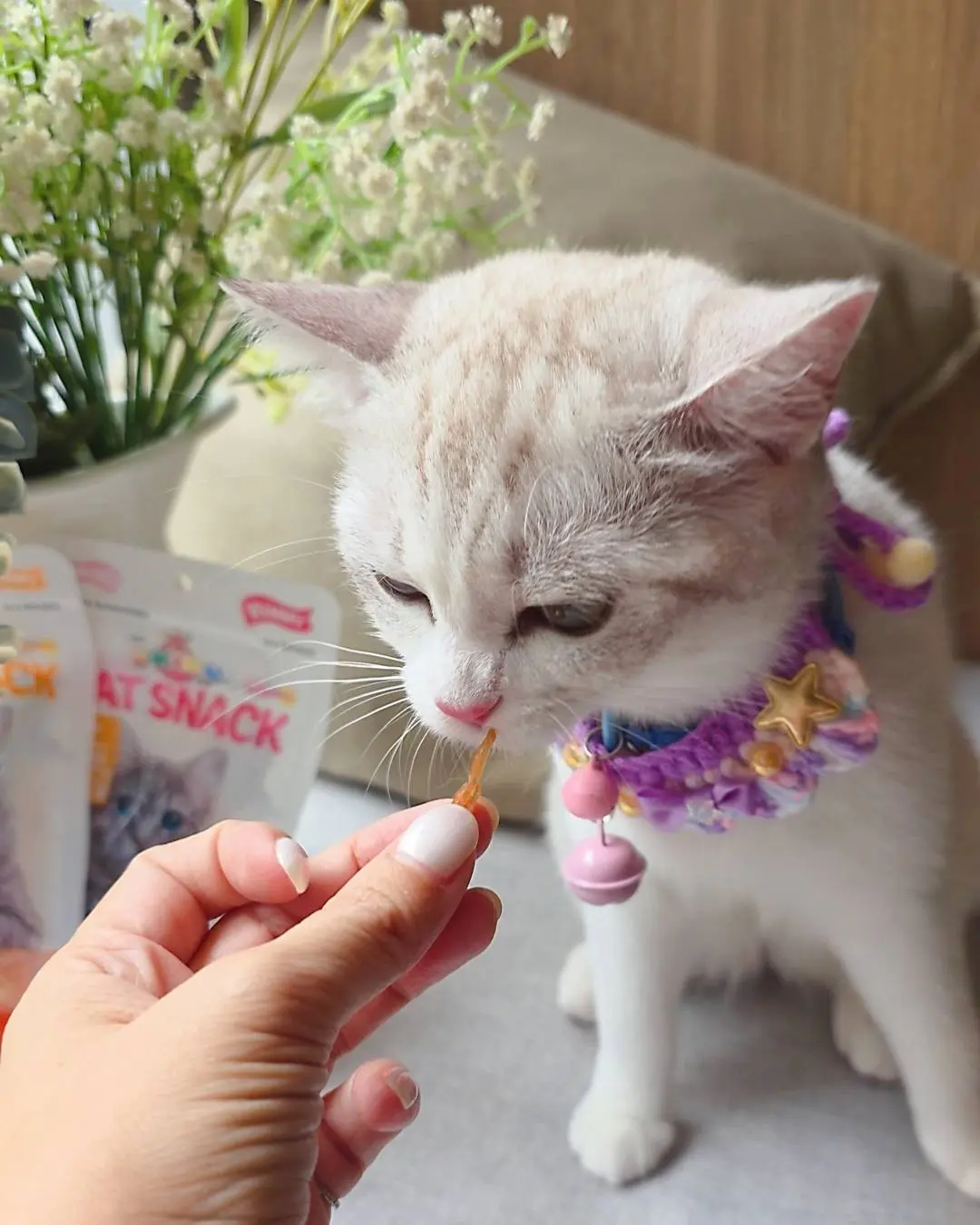
Why Okiko Cat Treats Can Be a Cost-Effective and Safe Choice
Many cat owners often ask, “Is Okiko cat snack good?”
From an overall perspective, Okiko Cat Snack is a strong option among meat-based cat treats for several reasons:
1) Variety of flavors
Okiko offers multiple options such as bonito, salmon, and tuna, which are all great sources of quality protein.
2) Portion-friendly formats
It comes in sliced sheets and cube bites, making it easier for owners to break treats into smaller pieces. This helps control calories more accurately compared to liquid treats in squeeze pouches.
3) Better freshness in smaller packs
Smaller pack sizes allow treats to be used up faster, reducing the risk of rancid smell or contamination from keeping an opened pack for too long.
5 Safety Checks Before Buying Any Cat Treat
Before choosing a treat, make sure to check these key points:
- The main ingredient should clearly be real meat or fish
- Low sodium (not overly salty)
- Avoid products with excessive artificial colors or synthetic flavoring
- Clear manufacturing date and expiration date
- Monitor your cat after eating if your cat has diarrhea or skin irritation, stop immediately
How to Give Treats Without Harming Your Cat’s Health
How often should you give treats?
A widely recommended rule from veterinarians is the 10% rule—meaning treats should not exceed 10% of your cat’s total daily calorie intake.
- Normal days: once a day is enough, or 3–5 days per week
- During training: treats can be given more often, but only in tiny pieces, and you should slightly reduce main-meal portions to balance total calories
What Treats Can Overweight Cats Still Have?
If your cat starts gaining weight, you don’t have to cut treats out completely—but you do need to adjust your approach:
1) Choose high-protein, low-fat treats
For example: dried fish or dried chicken breast with no added starch or fillers.
2) Use the “small but frequent” method
Break one treat into 4–5 smaller pieces. Your cat still feels rewarded more often, while total calories drop significantly.
3) Make treats an “earned reward”
Before giving a treat, encourage your cat to play (e.g., with a wand toy) for 5–10 minutes to support calorie burn and stimulate activity.
Summary
Choosing cat treats isn’t only about taste it’s about nutrition and long-term health. If you’re looking for a cost-effective option, Okiko cat treats can be a good choice thanks to their portion-friendly format and real fish-based nutrition. However, the most important factor is still portion control using the 10% rule, along with choosing treats that match your cat’s age and health needs. With the right balance, your cat can stay energetic, healthy, and happy for years to come.


related blog





Shop Available Now
let’s shop




Shop Available Now
let’s shop