Tips for choosing kitten food for healthy development and growth.
Posted Date: 12/12/2568
Tips for Choosing Kitten Food for Healthy Growth and Development | Okiko
Caring for kittens is not an easy task—especially when it comes to nutrition, which directly affects their development, overall health, and immune system. Choosing the right kitten food with complete and balanced nutrition is essential from birth through the growth stage.
In this article, we’ll guide you through the key nutrients kittens need, how to choose suitable kitten food, how to adjust diets according to age, and practical tips for raising strong, healthy kittens—along with recommendations for high-quality cat food such as Okiko.
Essential Nutrients Kittens Need
Kittens have nutritional requirements that differ significantly from adult cats. Their bodies are still developing, their immune systems are not yet fully mature, and they require high energy levels to support rapid growth.
High-Quality Protein
Protein is a fundamental nutrient for kitten growth. It supports the development of muscles, bones, and internal organs. When choosing kitten food, look for formulas that use high-quality animal protein to promote strong muscles and healthy development.
Healthy Fats and Omega-3
Fats are an important energy source, especially omega-3 fatty acids, which support brain development and vision. Kittens that receive sufficient healthy fats tend to have better learning abilities and sharper eyesight.
Vitamins and Minerals
Vitamins and minerals play a vital role in proper growth, strong bones and teeth, and immune system support—particularly vitamins A, D, and E, as well as calcium and phosphorus.
Probiotics and Dietary Fiber
Since kittens’ digestive systems are still developing, probiotics help balance gut bacteria and reduce digestive issues such as diarrhea or bloating.
How to Choose the Right Kitten Food
Selecting kitten food isn’t just about taste—it must align with your kitten’s physical needs and developmental stage.
Choose According to Age and Development
Kittens have very specific nutritional needs that differ greatly from adult cats. Food should be selected based on each growth stage to ensure kittens receive adequate energy and nutrients to support proper physical and developmental growth.
Ingredient Quality
Kitten food should be made from high-quality ingredients, free from preservatives, and without added salt or excessive artificial additives. This helps prevent disease and long-term health problems.
Taste and Texture Suitability
Some kittens prefer soft textures or finely textured wet food. Choosing food that is easy for kittens to eat encourages consistent intake and ensures they receive complete nutrition without feeding difficulties.
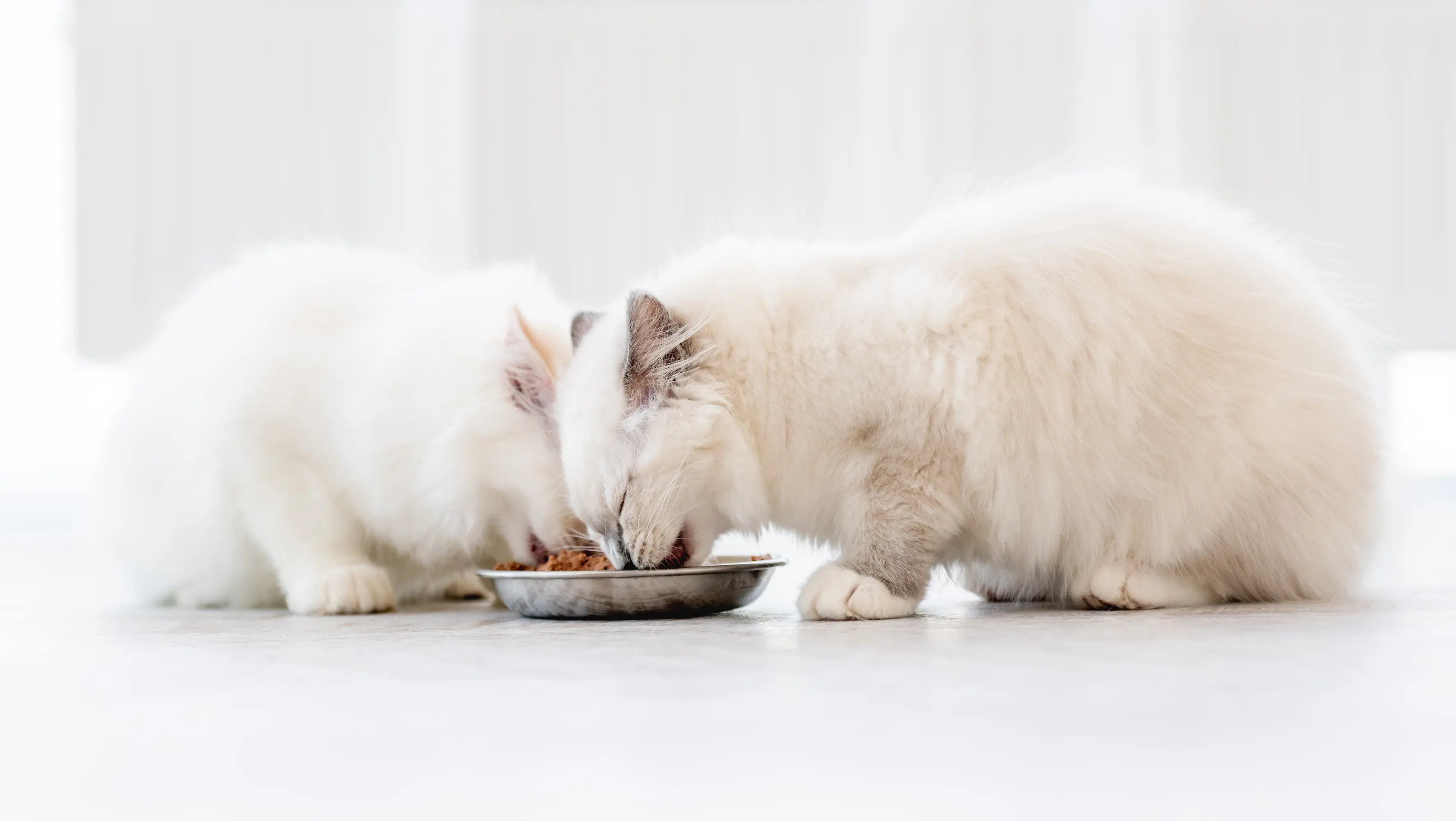
Adjusting Diet According to Age and Development
Adapting the type and form of food to match each stage of a kitten’s growth is a crucial part of proper care. This ensures kittens receive the right nutrients in appropriate amounts to meet their physiological needs throughout each phase of development.
What Can Kittens Aged 1–2 Months Eat?
During this stage, kittens begin the weaning process. Finely mashed food or kitten-formulated wet mousse is essential, as it is easy to digest and rich in concentrated nutrients.
At first, wet food should be mixed with kitten milk replacer or warm water to create a porridge-like texture. Gradually, the texture can be adjusted to normal consistency, followed by introducing dry kibble softened with water to make it easier to chew.
Important Precaution
Never feed cow’s milk to kittens. Lactose can cause severe diarrhea and digestive problems in young cats.
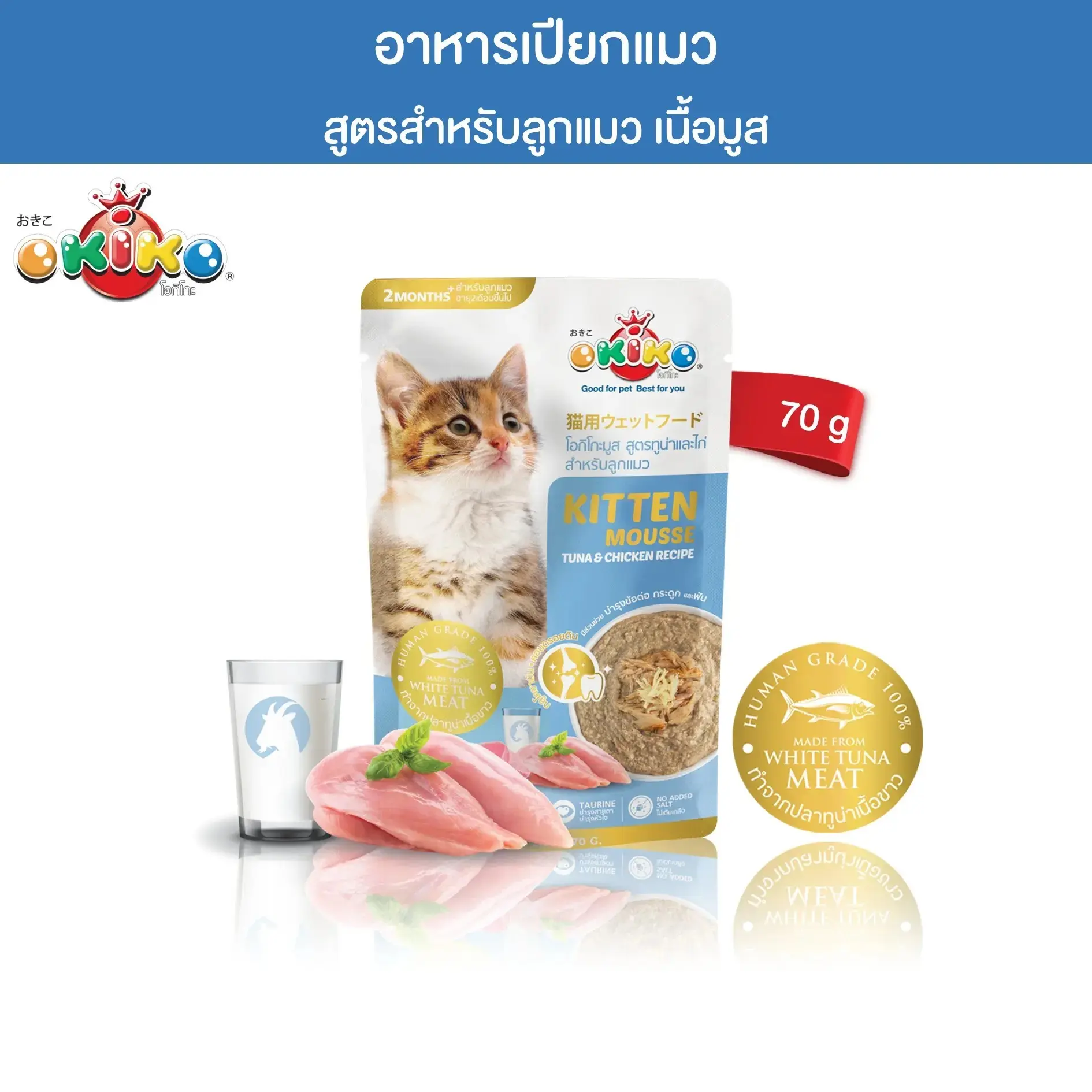
Recommended Food
OKIKO Wet Cat Food – Mousse Texture (Tuna & Chicken)
Finely blended mousse texture that is easy to digest, made with high-protein tuna and chicken. Enriched with calcium from goat’s milk, along with essential vitamins and minerals.
Contains no added salt and no preservatives, helping support healthy bones, joints, and digestive function.
What Can Kittens Aged 2–6 Months Eat?
Kittens in this age range experience rapid growth and require up to twice the energy and nutrients of adult cats. Feeding a kitten-specific formula with high protein and fat content is essential.
Soft-textured wet food enriched with calcium and glucosamine helps strengthen bones and joints. For balanced nutrition, kittens should be fed a combination of dry food and wet food.
Important Precaution
Never feed cow’s milk to kittens. Lactose can cause severe diarrhea and digestive issues.
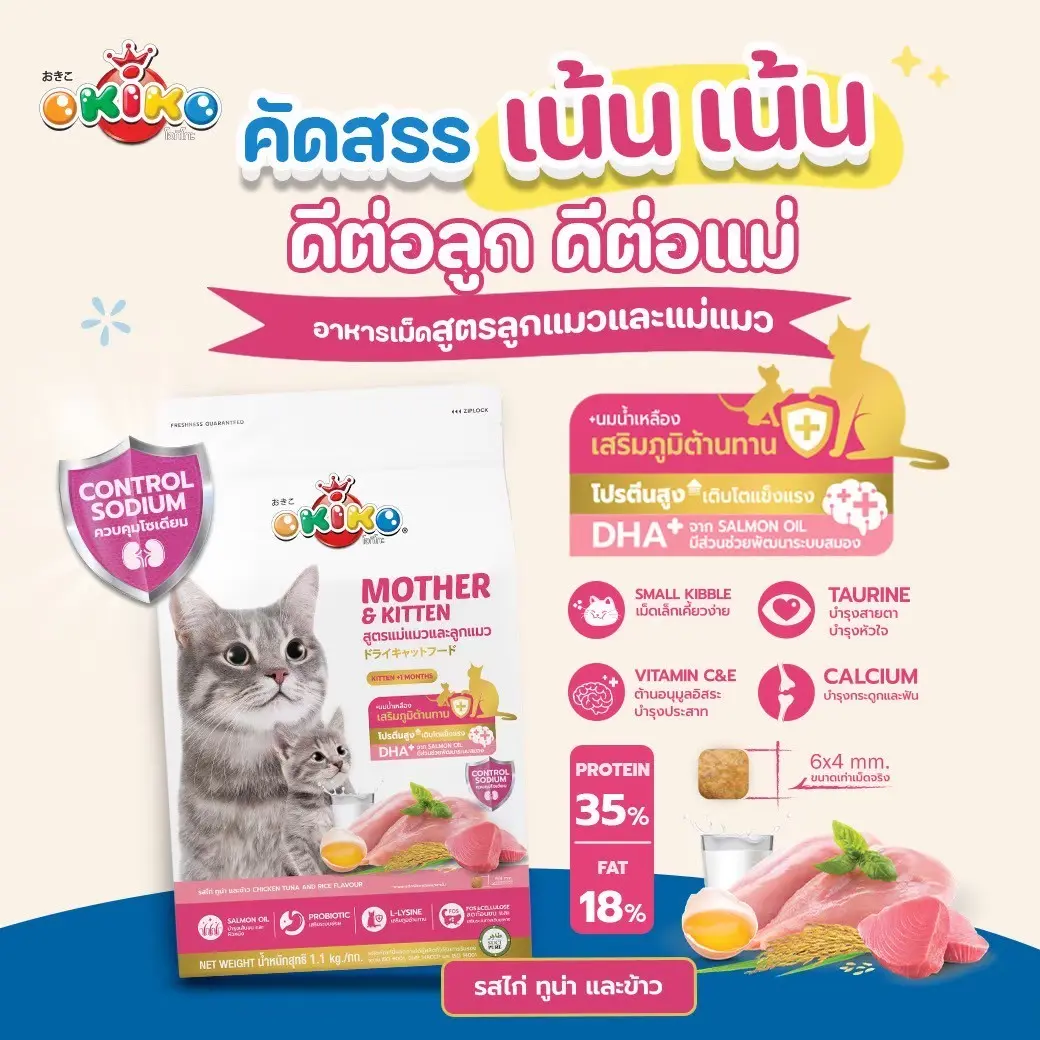
Recommended Food
OKIKO MOTHER & KITTEN
High-protein formula made from chicken and tuna, enriched with colostrum, DHA, and salmon oil to support brain development, strengthen the immune system, and promote healthy skin and coat.
Contains probiotics to aid digestion and features small, easy-to-chew kibble, ideal for both mother cats and kittens.
What Can Kittens Aged 6–12 Months Eat?
During this stage, kittens enter their final growth phase. Their digestive system and immune function are nearly fully developed. Nutrition should still focus on a kitten-specific formula that provides complete and balanced nutrients.
However, kibble size should be gradually increased to help strengthen teeth and jaw muscles, while ensuring a steady intake of energy, protein, and essential nutrients—preparing kittens for a smooth transition to adult cat food.
Important Precaution
Kittens at this age are at risk of becoming overweight if overfed, as their growth rate begins to slow. Portion control is essential to maintain a healthy body condition.


related blog




Shop Available Now
let’s shop




Shop Available Now
let’s shop